
Introduction
The Energy Revolution System is the foundation of modern civilization. It powers our homes, industries, hospitals, schools, transportation systems, communication networks, and agricultural activities. For more than a century, the world’s energy needs have depended heavily on fossil fuels such as coal, petroleum, and natural gas. Although these resources have supported industrial development and economic growth, their extensive use has also contributed to air pollution, greenhouse gas emissions, climate change, and concerns about energy security.
The Energy Revolution System represents the transformation of how energy is produced, stored, distributed, and consumed. In a broad sense, it involves shifting towards renewable energy sources, improving energy efficiency, developing advanced storage technologies, modernising electricity grids, and encouraging responsible energy consumption.
This transformation is becoming increasingly important as countries seek reliable, affordable, and environmentally sustainable energy supplies. According to the International Energy Agency (IEA), renewable energy continues to expand rapidly, while electricity networks and energy storage are becoming increasingly important for integrating variable sources such as solar and wind power.
It is important to clarify that the term Energy Revolution System can refer to a general energy-transition concept or to a specific commercial product. This article discusses the broader energy transformation rather than assuming that the term identifies one scientifically verified machine or device.
1. What Is the Energy Revolution System?
The Energy Revolution System can be understood as an integrated approach to building a cleaner, more efficient, and more dependable energy infrastructure. Instead of relying primarily on conventional fuels, it combines different technologies to meet energy requirements while reducing environmental damage.
A modern energy system includes much more than a power generator. It encompasses energy production, conversion, storage, transmission, distribution, monitoring, and final consumption. Renewable energy systems, for example, can combine solar panels, wind turbines, inverters, batteries, control software, and connections to the electricity grid.
The main objectives of an energy revolution are to:
- Reduce dependence on fossil fuels.
- Increase the use of renewable energy sources.
- Lower greenhouse gas emissions and air pollution.
- Improve energy efficiency and reduce waste.
- Strengthen energy security and reliability.
- Expand access to affordable electricity.
- Support sustainable economic development.
The ultimate goal is not simply to produce more electricity, but to provide useful energy services with fewer environmental and economic costs.
2. Major Components of the Energy Revolution System
A. Solar energy
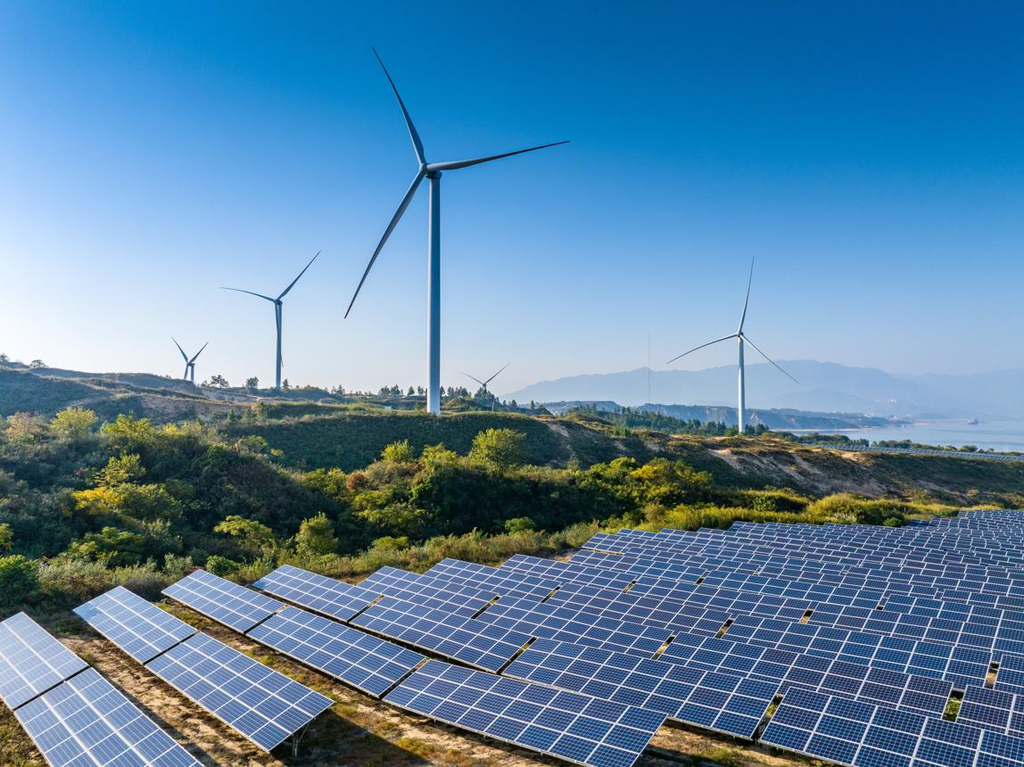
Solar panels convert sunlight directly into electricity. Rooftop solar installations can supply homes, offices, schools, and commercial buildings, while large solar farms can contribute electricity to the public grid. Solar energy is particularly promising in sunny regions, including much of India. However, its output depends on sunlight, weather, and the availability of suitable installation space.
B. Wind energy
Wind turbines convert the kinetic energy of moving air into electricity. Wind farms can generate substantial amounts of power in locations with favourable wind conditions. Wind energy complements solar power because wind generation patterns can differ from solar generation patterns. Careful site selection and environmental assessment are essential.
C. Energy storage
Batteries store electricity for use when generation is insufficient or demand rises. Pumped-storage hydropower can also store energy by moving water to a higher reservoir and releasing it through turbines when electricity is needed. Storage helps balance supply and demand, although costs, battery materials, lifespan, and recycling remain important considerations.
D. Smart grids
Smart grids use digital sensors, communication systems, automation, and monitoring technologies to manage electricity more effectively. They can help utilities identify faults, balance demand, integrate renewable generation, and improve network performance. Strong transmission and distribution infrastructure is necessary to deliver clean electricity where it is required.
E. Energy-efficient technologies
LED lighting, efficient appliances, heat pumps, electric vehicles, building insulation, and industrial energy-management systems reduce energy waste. Using electricity more efficiently can lower costs and reduce the amount of new generating capacity needed to meet demand.
3. How Does the Energy Revolution System Work?
The system works by connecting energy generation with storage, distribution, and consumption. Consider a home equipped with rooftop solar panels and a battery.
During the day, solar panels generate electricity. The Energy Revolution System home uses this electricity to operate appliances, lighting, and other equipment. Any surplus electricity may charge the battery or, where permitted, be exported to the grid. At night, the household can use stored electricity or draw power from the grid.
A smart energy-management system can monitor electricity production and consumption, helping users decide when to operate appliances or charge batteries. Larger installations apply similar principles across factories, communities, and entire electricity networks.
The process generally follows five stages:
- Generation: Produce electricity from solar, wind, hydropower, geothermal energy, or other sources.
- Conversion: Use suitable electrical equipment, such as inverters, to make electricity compatible with appliances and networks.
- Storage: Store surplus electricity when practical and economically beneficial.
- Distribution: Deliver electricity through transmission lines, distribution networks, or local microgrids.
- Consumption and monitoring: Use energy efficiently while tracking demand, performance, and operating costs.
A well-designed system may combine several energy sources to improve reliability. Nevertheless, its performance depends on engineering design, weather conditions, equipment quality, maintenance, and the availability of backup power.
4. Importance of the Energy Revolution
The energy revolution matters because energy demand continues to grow as populations expand, industries develop, and digital technologies become more widespread. At the same time, many countries seek to reduce emissions and protect themselves from disruptions in imported fuel supplies.
The IEA’s Electricity 2025 analysis projected that low-emissions sources, including renewables and nuclear power, would meet global electricity-demand growth through 2027. This illustrates the growing role of cleaner electricity generation, although the speed of the transition varies between countries.
The energy revolution is important for several reasons.
- Environmental protection: Replacing some fossil-fuel consumption with low-emissions energy can reduce greenhouse gas emissions and harmful air pollutants.
- Energy security: Domestic renewable resources can reduce exposure to international fuel-price fluctuations and supply disruptions.
- Economic development: New energy projects create demand for engineers, technicians, construction workers, researchers, and maintenance professionals.
- Rural electrification: Solar mini-grids and standalone systems can serve remote communities where extending conventional electricity networks is difficult or expensive.
- Technological innovation: Better batteries, power electronics, smart meters, and energy-management software can improve the efficiency and flexibility of energy infrastructure.
The benefits are greatest when new technologies are supported by reliable infrastructure, sensible policies, skilled workers, and affordable financing.
5. Advantages of the Energy Revolution System
The Energy Revolution System offers several practical advantages for households, businesses, governments, and society.
Lower operating costs: Solar installations and energy-efficient equipment can reduce electricity expenses. However, the actual savings depend on installation costs, electricity tariffs, maintenance, sunlight availability, and the system’s design.
Reduced environmental impact: Renewable energy technologies generally produce much lower operational greenhouse gas emissions than coal- or gas-fired power plants. Their complete environmental footprint still includes manufacturing, transportation, land use, and equipment disposal.
Greater energy independence: Homes, farms, and businesses can generate some of their own electricity, reducing dependence on external suppliers. Complete independence usually requires adequate storage, backup arrangements, and careful planning.
Improved reliability: Properly designed microgrids, batteries, and diversified energy sources can help maintain electricity supplies during certain grid disruptions.
Employment opportunities: Renewable energy projects support jobs in installation, engineering, manufacturing, maintenance, research, and project management.
6. Challenges and Limitations
Despite its advantages, the energy revolution faces significant challenges. Understanding these limitations is essential to making realistic decisions.
- High initial investment: Solar panels, batteries, inverters, and electrical upgrades may require substantial upfront expenditure.
- Intermittent generation: Solar power depends on sunlight, while wind power depends on wind conditions. Reliable electricity systems must balance these variations through storage, flexible generation, grid connections, and demand management.
- Infrastructure requirements: Older electricity networks may need upgrades to accommodate large quantities of renewable electricity.
- Resource and recycling concerns: Batteries, solar panels, and wind turbines require raw materials and responsible end-of-life management.
- Unequal access: Low-income households and remote communities may lack the financing, infrastructure, or technical support needed to benefit from new energy technologies.
- Technical skills: Designing, installing, and maintaining energy systems requires trained professionals and appropriate safety standards.
Another important limitation concerns claims of free energy. No device can continuously produce usable energy without an energy source. A machine that claims to generate more energy than it receives would conflict with the established principle of conservation of energy. Therefore, commercial products promising unlimited electricity or guaranteed elimination of electricity bills should be evaluated carefully using independent technical evidence.
7. Role of the Energy Revolution in India
India has considerable potential to advance the energy revolution through solar power, wind energy, hydropower, biomass, energy storage, and improved electricity networks. Its growing electricity demand makes the transition important for both economic development and environmental protection.
Rooftop solar systems can help households and businesses generate electricity locally. Solar-powered irrigation can support farmers where installations are properly designed, while renewable-powered microgrids can improve energy access in remote locations.
Electric vehicles, efficient industrial equipment, and modern transmission networks can further reduce dependence on conventional fuels. Government policies, investment, technical education, and research will play important roles in expanding these technologies.
However, India’s energy transition must also address affordability, land requirements, grid stability, manufacturing capacity, and the need to provide dependable electricity throughout the day and night.
8. Future Prospects
The future of the energy revolution will likely involve greater integration of renewable electricity, battery storage, artificial intelligence, smart grids, electric transportation, and energy-efficient buildings.
Artificial intelligence and digital monitoring can help forecast energy demand, detect equipment faults, and optimise electricity distribution. Advances in battery technology may improve storage performance, while green hydrogen could help decarbonise selected industrial processes that are difficult to electrify directly.
The IEA identifies grid investment and flexibility as important priorities as renewable energy expands. This means the future will depend not only on installing more solar panels and win