
Introduction
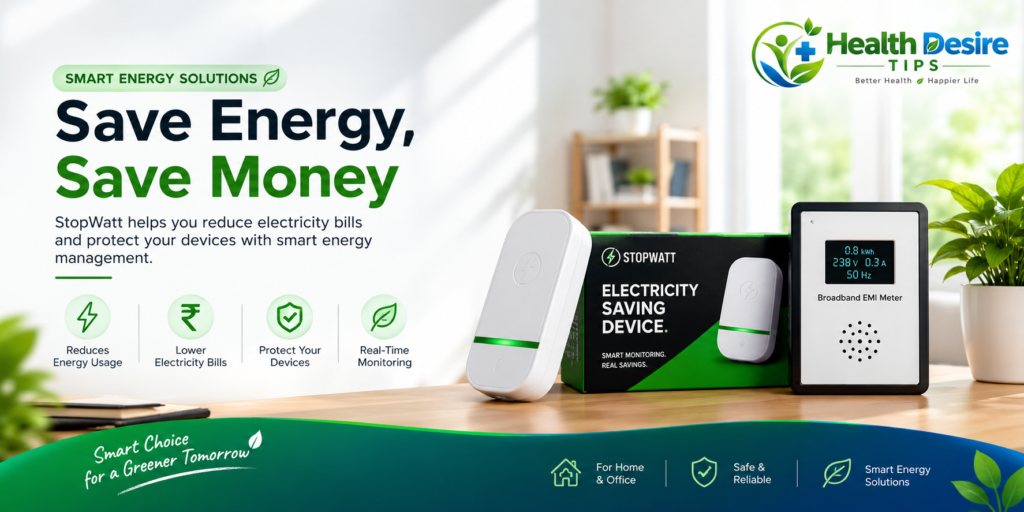
Electricity bills are a common concern for homeowners and families. As the cost of energy increases, many people look for simple ways to reduce their monthly expenses. One product that has attracted attention online is StopWatt, a plug-in device marketed as an electricity-saving solution. In this detailed StopWatt Reviews article, we will explore what StopWatt is, how it claims to work, its advertised benefits, customer feedback, possible limitations, and whether it is worth considering.
StopWatt is promoted as a simple device that can be plugged into a wall outlet without complicated installation. Its marketing suggests that it can improve electrical efficiency and help reduce electricity bills. However, it is important to separate advertising claims from independently verified results. If you are considering buying this product, understanding its features and limitations can help you make a more informed decision.
𝐋𝐈𝐌𝐈𝐓𝐄𝐃 𝐓𝐈𝐌𝐄 𝐒𝐏𝐄𝐂𝐈𝐀𝐋 𝐎𝐅𝐅𝐄𝐑 𝐇𝐔𝐑𝐑𝐘 𝐔𝐏 𝐀𝐍𝐃 𝐎𝐑𝐃𝐄𝐑 𝐍𝐎𝐖
What Is StopWatt?
StopWatt Reviews is a small plug-in device marketed as an energy-saving product for homes. It is designed to be connected to an electrical outlet, and some sellers claim that it helps stabilize electrical current and improve power efficiency. According to product marketing, StopWatt is intended to support a more stable electrical environment and potentially help users manage electricity-related concerns.
Unlike solar panels or smart energy-monitoring systems, the advertised plug-in version does not require a major home installation. The seller presents it as a convenient option for people who want a simple solution. However, easy installation does not automatically mean that a device can reduce household electricity consumption. Its actual performance needs to be evaluated separately from the claims made in advertisements.
How Does StopWatt Work?
StopWatt Reviews is marketed as a device that works with the electrical supply in your home. Promotional descriptions suggest that it uses internal electrical components to influence certain aspects of the current flowing through a household electrical system. The advertised working process generally includes the following ideas.

TO VISIT MORE OR TO BUY (STOPWATT) VISIT OFFICIAL WEBSITE HERE
1. Electrical Current Stabilization
The product is promoted as helping stabilize electrical current. Stable electrical conditions can be important for certain equipment, but this claim alone does not prove that a household will consume fewer kilowatt-hours of electricity.
2. Power Quality Management
Some StopWatt advertisements refer to power quality, electrical fluctuations, and so-called dirty electricity. These terms relate to real electrical concepts, but the presence of such terms does not establish that the product provides a meaningful benefit in an ordinary home.
3. Plug-and-Play Installation
The product is designed to be plugged into a compatible electrical outlet. This approach makes it easy to install compared with equipment that requires professional wiring or a dedicated energy-management system. Nevertheless, users should confirm the device’s voltage compatibility and electrical safety certifications before using it.
4. Claimed Electricity Savings
The primary selling point of StopWatt is the possibility of reducing electricity bills. However, no reliable savings percentage should be assumed without independent testing. A device must demonstrate a measurable reduction in energy consumption to establish that it can meaningfully lower a typical household’s electricity bill.
StopWatt Reviews: Main Features and Advertised Benefits
People researching StopWatt reviews often want to know what the product offers and whether its features justify the purchase. Here are some of the main features promoted by sellers.
Simple Installation
StopWatt is designed for plug-in use. Users do not need to carry out a major installation simply to connect the device to a compatible outlet.
Compact Design
Its small size makes it easy to place near an electrical outlet without taking up much space.
No Complicated Setup
The plug-in design is promoted as a convenient option for people who prefer simple household products rather than complicated electrical equipment.
TO VISIT MORE OR TO BUY (STOPWATT) VISIT OFFICIAL WEBSITE HERE
Potential Interest in Power Quality
The product’s marketing focuses on electrical stabilization and power quality. However, the actual benefits depend on the device’s design and performance, and they should not be confused with proven reductions in electricity consumption.
Advertised Energy Savings
Lower electricity bills are one of the main benefits promoted in StopWatt advertisements. Consumers should be cautious about claims of dramatic savings unless they are supported by independent, controlled test results. It is important to remember that these are advertised features and potential benefits, not a guarantee of real-world performance.
Does StopWatt Really Reduce Electricity Bills?
This is one of the most important questions to consider before purchasing the product. is promoted as an energy-saving device, but there is a significant difference between changing certain electrical characteristics and reducing the amount of energy a home actually consumes.
Most residential electricity bills are based largely on energy consumption measured in kilowatt-hours (kWh). Appliances such as air conditioners, refrigerators, water heaters, washing machines, and electric ovens consume energy while operating. A plug-in device that does not control these appliances or reduce their actual energy use cannot be assumed to lower the bill substantially.
An important independent assessment came from the UK Advertising Standards Authority (ASA). In a ruling published on September 30, 2026, the ASA found that StopWatt-related electricity-saving advertising claims were not substantiated by the advertiser. The regulator also concluded that the claimed reductions in electricity use and household bills were misleading in the case it examined.
This does not mean that every electrical power-quality device is ineffective in every application. It does mean that consumers should not rely on unverified claims of significant household savings. Source: UK Advertising Standards Authority, ASA Ruling on Esaverwatt.com t/a StopWatt.
TO VISIT MORE OR TO BUY (STOPWATT) VISIT OFFICIAL WEBSITE HERE
StopWatt Customer Reviews: What Are Buyers Saying?
Customer feedback is another important part of any StopWatt review. Online reviews can help identify common concerns, but they should be considered alongside technical evidence and independent testing. Feedback about StopWatt is mixed across online sources.
Positive Feedback
Some promotional websites display positive testimonials from customers who say that they noticed lower electricity bills after using the product. Such testimonials may explain why some shoppers become interested in the device. However, individual experiences do not establish that the product caused the reported savings. Electricity bills can change because of weather conditions, seasonal usage, electricity rates, changes in household routines, and other factors.
Negative Feedback
The Trustpilot profile for StopWatt contains numerous negative customer reviews. Common complaints in the available review summaries include:
- Customers report no noticeable reduction in their electricity bills.
- Concerns about whether the product delivers the benefits advertised.
- Complaints about ordering and checkout experiences.
- Dissatisfaction with the product’s overall value.
Trustpilot feedback is based on individual customer experiences and is not a controlled scientific test. Nevertheless, recurring complaints are worth considering before making a purchase.
Source: Trustpilot, Stopwatt Reviews.
Are Online Reviews Always Reliable?
No. Online reviews should not be treated as proof of product performance. Before trusting a testimonial, check whether the reviewer provides measurable evidence, such as electricity consumption before and after installation, under comparable conditions.
Also be cautious of websites that use identical testimonials, make extraordinary promises, or imply endorsements from well-known organizations without providing verifiable evidence.
Pros and Cons of StopWatt
Understanding both the potential advantages and the limitations can help consumers make a more balanced decision.
Potential Advantages
- Simple design: The product is compact and intended for plug-in use.
- Convenient installation: The advertised setup does not require a major home renovation.
- Low-effort approach: It may appeal to consumers looking for a straightforward household product.
- Interest in electrical efficiency: It encourages consumers to think about their electricity use and monthly bills.
These points describe the product’s format and intended appeal. They do not establish that it will deliver meaningful energy savings.
Potential Disadvantages
- Unproven savings claims: Significant reductions in electricity bills should not be assumed without independent evidence.
- Mixed customer feedback: Online reviews include complaints about performance and ordering experiences.
- Uncertain value for money: Buyers may not receive the financial benefit they expect.
- Need for safety verification: Electrical compatibility and recognized safety certifications should be checked before purchase.
- Risk of unrealistic expectations: Marketing promises can create the impression that a small device will solve a much larger energy-consumption problem.
Overall, the main concern is whether the product can demonstrate a measurable benefit that justifies its price.
Is StopWatt a Scam or Legit?
Many people search for phrases such as “Is StopWatt a scam?” and “Does StopWatt really work?” because the product is advertised with appealing claims.
A careful assessment should distinguish between the existence of a physical product and the effectiveness of its marketing promises. StopWatt is marketed as a real plug-in device. However, the key question is whether its claimed electricity-saving benefits are supported by credible evidence.
The ASA ruling discussed above is a significant warning about the substantiation of certain StopWatt-related advertising claims. Consumer complaints about performance also deserve attention.
For these reasons, it would be unwise to purchase StopWatt on the assumption that it will dramatically reduce your electricity bill. Before buying, check the seller’s identity, the exact product specifications, the return policy, the total checkout price, and independent test results. Avoid advertisements that promise guaranteed savings without credible supporting evidence.
Does StopWatt Have Any Independent Testing?
Independent testing is one of the most useful ways to determine whether an energy-saving product performs as advertised. A reliable test should measure actual energy consumption before and after installation while keeping relevant conditions as consistent as possible.
Useful evidence would include:
- Measurements from a calibrated electricity meter.
- Clearly documented testing procedures.
- Results from independent laboratories or qualified electrical professionals.
- A comparison of energy consumption in kilowatt-hours.
- A clear explanation of the electrical conditions under which the device provides a measurable benefit.
A glowing indicator light, a manufacturer’s statement, or a customer testimonial is not enough to prove that the product reduces electricity consumption. Consumers should look for published test reports rather than relying solely on advertising claims.
Better Ways to Reduce Your Electricity Bill
If your main goal is to save money, several practical methods have a clearer connection to reducing energy consumption.
1. Use Energy-Efficient Appliances
When replacing old appliances, compare their energy ratings and estimated annual electricity consumption. Efficient models can reduce the amount of electricity required for everyday tasks.
2. Reduce Air Conditioner Usage
Air conditioning can account for a substantial portion of electricity consumption in hot weather. Use suitable temperature settings, clean filters regularly, and maintain the equipment according to the manufacturer’s instructions.
3. Switch to LED Lighting
LED bulbs generally use less electricity than traditional incandescent bulbs while providing similar lighting levels.
4. Turn Off Unnecessary Equipment
Switch off appliances and lights when they are not needed. For devices that consume standby power, consider using a suitable switched power strip.
5. Monitor Electricity Consumption
Review your electricity bill and track your usage in kWh. A compatible energy monitor or smart meter can help identify patterns and show which activities consume the most energy.
6. Improve Home Insulation
Suitable insulation, weather sealing, shading, and ventilation can reduce the energy needed for heating and cooling.
These methods address actual energy use and can provide a more reliable starting point than depending on an unverified plug-in energy-saving device.
Frequently Asked Questions About StopWatt Reviews
1. What is StopWatt?
StopWatt is a plug-in product marketed for electrical stabilization and energy saving. Its advertised benefits should be distinguished from independently verified performance.
2. Does StopWatt really save electricity?
There is insufficient reliable evidence to recommend it as a proven way to meaningfully reduce typical household electricity consumption. The UK ASA has also challenged the substantiation of certain StopWatt-related energy-saving claims.
3. Is StopWatt easy to install?
The advertised device is designed for plug-in installation. Always check its specifications and compatibility with your electrical system before use.
4. Are StopWatt reviews positive or negative?
Online feedback is mixed, with promotional sites showing positive testimonials and customer-review platforms containing significant negative feedback. Neither source alone proves how well the device performs.
5. Is StopWatt worth buying?
If your main goal is to lower your electricity bill, it is difficult to recommend StopWatt without credible independent evidence of measurable savings. Consider established energy-efficiency measures first.
6. Does StopWatt have a money-back guarantee?
Some sellers advertise refund periods or money-back guarantees. These terms can vary by seller and offer, so read the current written policy carefully before ordering. Confirm the return deadline, shipping costs, exclusions, and refund procedure.
7. Can StopWatt protect household appliances?
Some marketing materials describe electrical stabilization and appliance protection. However, do not assume that StopWatt provides certified surge protection. Check the product’s safety certifications and technical specifications, and use appropriately rated surge-protection equipment where needed.
8. What is the best alternative to StopWatt?
Energy-efficient appliances, LED lighting, suitable air-conditioning settings, reduced standby consumption, and energy monitoring are practical alternatives. The best option depends on which appliances account for the most electricity use in your home.
Final Verdict: StopWatt Reviews
After examining the product’s advertised features, customer feedback, and available evidence, the most important consideration is whether StopWatt can deliver measurable electricity savings. The product offers a simple plug-in design and is marketed as a convenient way to improve electrical efficiency. However, its advertised benefits should not be confused with independently demonstrated reductions in household energy consumption.
Customer complaints and the UK Advertising Standards Authority’s findings about certain energy-saving claims provide additional reasons for caution.
Our conclusion: Do not rely on StopWatt as a proven electricity-saving solution unless credible independent testing demonstrates meaningful results. If you decide to purchase it, verify the seller’s return policy and safety specifications first.
For consumers who want to reduce monthly energy costs, focusing on efficient appliances, sensible air-conditioning use, and measured electricity consumption is a more evidence-based approach.
Ultimately, the best purchasing decision comes from comparing verified performance, realistic expectations, and total cost rather than relying on promotional claims alone.